Meet The Makers

An innovative collective of like-minded folks making useful and
enduring technology products

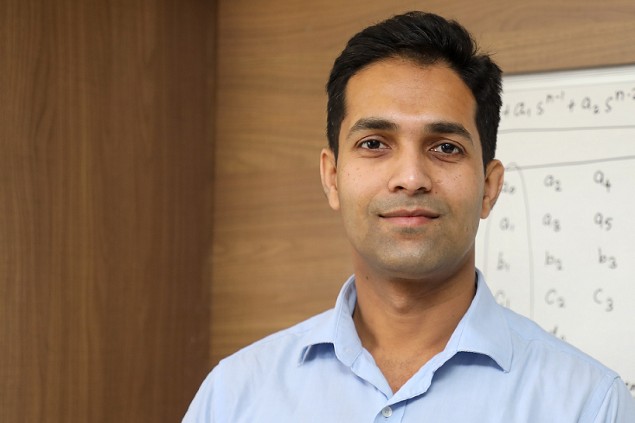
Dr. Vaibhav Tripathi

Assistant  Professor

Research Interests

  • Multisensory perception, attention & working memory
  • Large scale brain organization
  • Neuroscience & AI
  • Meditation & Consciousness

Email: vaibhav.tripathi@iitgn.ac.in

Lab Website: INT Lab

Education:

  • BE: Delhi College of Engineering, 2012
  • MTech: IIIT Delhi, 2018
  • MA: Boston University, 2020
  • PhD: Boston University, 2023

Office: 5/317
VOIP: 2635

Work Experience:

  • Assistant Professor, Indian Institute of Technology, Gandhinagar, (Mar 2025 to Present)
  • Postdoctoral Fellow, Centre for Brain Science & Department of Psychology, Harvard University, (Sep 2023 – Feb 2025)
  • Research Trainee, Brigham & Women’s Hospital, Harvard Medical School, (Dec 2021 to May 2023)
  • Research Assistant, Centre for Neuroscience, Indian Institute of Science, (Jan 2015 to Dec 2015)
  • Co-Founder, AhoLabs, (Jul 2013 to Dec 2014)
  • Software Engineer & Data Scientist, Paytm (Jun 2012 to Jun 2013)

Research Publications:

  1. Vaibhav Tripathi, Joshua Fox-Fuller, Vincent Malotaux, Ana Baena, Nikole Bonillas Felix, Sergio Alvarez, David Aguillon, Francisco Lopera, David C Somers, Yakeel T. Quiroz (2025). Connectome-based predictive modeling of brain pathology and cognition in Autosomal Dominant Alzheimer’s Disease. Alzheimer’s & Dementia.
  2. Vaibhav Tripathi, Ishaan Batta, Andre Zamani, Daniel Atad, Sneha Sheth, Jiahe Zhang, Tor Wager, Susan Whitfield-Gabrieli, Lucina Q. Uddin, Ruchika Prakash, Clemens Bauer (2025). Default mode network functional connectivity as a transdiagnostic biomarker of cognitive function. Biological Psychiatry: Cognitive Neuroscience and Neuroimaging.
  3. Vaibhav Tripathi, Laura Rigolo, Bethany K. Bracken, Alexandra J. Golby, Yanmei Tie, David C. Somers (2024). Utilizing resting-state functional connectivity-based motor prediction models for presurgical planning. Human Brain Mapping, 45 (10), e26764.
  4. Suruchi FialokeVaibhav Tripathi, Sonika Thakral, Anju Dhawan, Vidur Mahajan, Rahul Garg (2024). Functional connectivity changes in meditators and novices during yoga nidra practice. Scientific Reports, 14 (1), 12957. co-first author
  5. Vaibhav Tripathi, David C Somers (2023). Predicting an Individual’s Cerebellar Activity from Functional Connectivity Fingerprints. NeuroImage,Volume 281.
  6. Vaibhav Tripathi, Rahul Garg (2022). Weak Task Synchronization of Default Mode Network in task based paradigms. NeuroImage, Volume 251, 118940.
  7. Vaibhav Tripathi, Pallavi Bharadwaj (2021). Neuroscience of yogic theory of consciousness. Neuroscience of Consciousness, Volume 2021, Issue 2.

Courses Taught:

  • Research Methods
  • NeuroAI

Sameer V. Dalvi

Smt. Meera and Prof. Girish K. Sharma Chair Professor

Research Interests
● Engineering stable microbubbles formulations for biomedical applications
● Precipitation and stabilization of nnanoparticles in aqueous suspensions
● Supercritical fluid processing

Education:

BTech: Dr. B.A.Tech.University, 2001
MTech: IIT Bombay, 2003
PhD: IIT Bombay, 2007
Email: sameervd -AT- iitgn.ac.in

Website: https://sameervd.wixsite.com/mysite

Office: 5/403

Work Experience:

  • Professor, Indian Institute of Technology, Gandhinagar (Feb 2020 to present)
  • Associate Professor, Indian Institute of Technology, Gandhinagar (Nov 2015 to Feb 2020)
  • Assistant Professor, Indian Institute of Technology, Gandhinagar (Dec 2009 – Nov 2015)
  • Research Scientist, Department of Chemical Engineering, Columbia University (in the City of New York), USA (Jun 2009 – Dec 2009)
  • Post-doctoral Research Associate, New Jersey Center for Engineered Particulates (NJCEP), New Jersey Institute of Technology, NJ, USA (Apr 2007 – May 2009)

Awards:

  • NASI – Young Scientist Platinum Jubilee Award for the year 2015 by National Academy of Sciences, India
  • Excellence in Research Award for the year 2012-13 by Indian Institute of Technology Gandhinagar
  • Excellence in Teaching Award for the year 2010-11 by Indian Institute of Technology Gandhinagar
  • Young Engineers Award for the year 2010 by Institution of Engineers (India)
  • Young Researcher Award for year 2004 by Indian Institute of Chemical Engineers (IIChE)

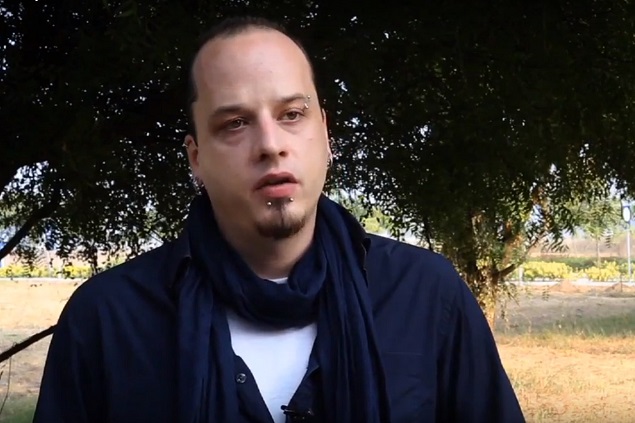
Angus McBlane

Philosophy and Cognition

Visiting Assistant Professor

Research Areas: Phenomenology, Neurophenomenology, Embodied Cognition, Colour

E-mail: amcblane@iitgn.ac.in

My research intersects with the philosophical aspects of Cognitive Science via my focus on Phenomenology and Posthumanism. Phenomenology, particularly in its Merleau-Pontyian form, informs my analytic focus on embodiment and attendant areas such as embodied cognition, intentionality, experience, and expression. Posthumanism, particularly in its more philosophical deployments, informs my research, on the one hand, on how we can approach non-human forms of embodiment and consciousness and, on the other, the use and development of new technologies (as well their exploration in Science Fiction) as they relate to extended and distributed cognition, artificial intelligence, and embodiment.

Education:

  • PhD: Cardiff University, 2014
  • MA: Queen’s University, Canada, 2008
  • BA: Simon Fraser University, Canada, 2006

Selected Publications:

  • Expressing Corporeal Silence: Phenomenology, Merleau-Ponty, and Posthumanism.’ Word and Text: A Journal of Literary Studies and Linguistics, Special Issue on Proto-Posthumanisms. Vol. VI (Dec 2016), pp.149-161.  
  • Co-Authored with Phillip Roberts, “Science Fiction” in Directory of World Cinema: South Korea, ed. by Colette Balmain (Bristol: Intellect, 2013), pp. 211-21
  • “The Good, The Bad, and the Weird”; “2009: Lost Memories”; “Natural City”; “Resurrection of the Little Match Girl”, in Directory of World Cinema: South Korea, ed. by Colette Balmain (Bristol: Intellect, 2013), pp. 101-103, 215-216, 221-222, 222-223.
  • “Just a Ghost in a Shell?” in Anime and Philosophy: Wide-Eyed Wonder, ed. by Josef Steiff and Tristan Tamplin (Chicago: Open Court, 2010), pp. 27-38“Shogun Assassin”; “The Machine Girl”; “Tetsuo: The Iron Man”, “Tetsuo 2: Body Hammer”, in Directory of World Cinema: Japan, ed. by John Berra (Bristol: Intellect, 2010), pp. 97-98, 192-193, 220-222.
  • “Shogun Assassin”; “The Machine Girl”; “Tetsuo: The Iron Man”; “Tetsuo 2: Body Hammer”; “Memories”; “Cowboy Bebop: The Movie”; “Blood: The Last Vampire”; “Vampire Hunter D”; “Vampire Hunter D: Bloodlust”, (Online, 2009) Directory of World Cinema. http://worldcinemadirectory.org/

Courses Taught:

  • HS 507 – Humanism, Anti-Humanism, and Posthumanism
  • HS 647 – Literature, Theory, and Social Context

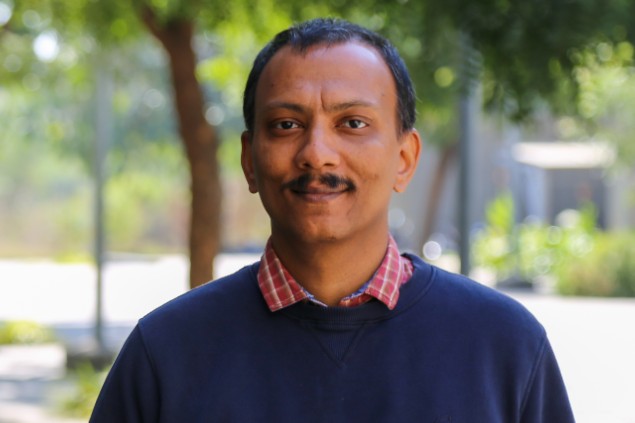
Jaison Manjaly

Philosophy and Cognition

Jasubhai Memorial Chair Professor

Research Areas: Curiosity, Education, Moral Cognition

Email: jmanjaly@iitgn.ac.in

Lab Website: Curiosity Lab | Art@IITGN

Jaison Manjaly is Jasubhai Memorial Chair Professor of Philosophy and Cognitive Science at IIT Gandhinagar. His research interests include curiosity, education, and moral cognition. He is the Principal Investigator of the Curiosity Lab at IIT Gandhinagar, which aims to develop interventions to foster curiosity in the classroom.

At IIT Gandhinagar, he pioneered the establishment of the Centre for Cognitive and Brain Sciences. He is the former Dean of Student Affairs, and Head of Humanities, Social and Cognitive Sciences at IIT Gandhinagar. He is currently the Faculty in-charge of Alumni Relations.

Jaison Manjaly joined IIT Gandhinagar in October 2008.  His main areas of research are curiosity, education, and moral cognition. Currently, he focuses on ‘curiosity’ as a tool to address epistemic inequality. He also takes a keen interest in student affairs, education, and politics of knowledge.

Education: 

  • PhD: IIT Kharagpur, 2007
  • MA: University of Calicut, 2001
  • BA: Mahatma Gandhi University, 1999

Professional Research Experience:

  • Professor, Indian Institute of Technology, Gandhinagar, (Feb 2020 to Present)
  • Associate Professor, Indian Institute of Technology, Gandhinagar, (Nov 2015 to Feb 2020)
  • Assistant Professor, Indian Institute of Technology, Gandhinagar, (Oct 2008 – Nov 2015)
  • Postdoctoral Fellow, Centre for Behavioral and Cognitive Science, (Oct 2006 – Oct 2008)

Selected Publications:

  • Sahai, A., & Manjaly, J. A. 2024. Economic inequality and relative deprivation influence prosocial decisions towards moral and immoral causes. Cogent Psychology. https://doi.org/10.1080/23311908.2024.2429902
  • Sahai, A., & Manjaly, J. A. 2024. Risky mindset: prior exposure to risk increases utilitarian choices in sacrificial moral scenarios. Frontiers in Behavioral Economics. https://doi.org/10.3389/frbhe.2024.1332416
  • Manjaly, J. A.. 2024. Philosophy for Engineers: IIT Gandhinagar ExperienceThe Newsletter. International Institute of Asian Studies.
  • Singh, A., & Manjaly, J. A. 2022 Using curiosity to improve learning outcomes in schools. Sage Open. https://doi.org/10.1177/21582440211069392
  • Ehrig, T., Manjaly, J. A., Singh, A & Sunder, S. 2022. Adaptive Rationality in Strategic Interaction: Do Emotions Regulate Thinking About Others? Strategy Science. https://doi.org/10.1287/stsc.2021.0152
  • Singh, A. & Manjaly, J. A.,. (2021). The effect of information gap and uncertainty on curiosity and its resolution. Journal of Cognitive Psychology. https://doi.org/10.1080/20445911.2021.1908311
  • Singh, A. & Manjaly, J. A. (2020). The Distress Smile and its Cognitive Antecedents. Journal of Nonverbal Behavior. https://doi.org/10.1007/s10919-020-00345-z
  • N. A., Baby. Ziliya., & Manjaly, J. A. (2020). Dehumanization of Scheduled Castes and Scheduled Tribes (SC/ST): Evidence from Implicit, Moderate, and Blatant Measures. Analyses of Social Issues and Public Policy. https://doi.org/10.1111/asap.12214
  • Fonseca, A. F., Bandyopadhyay, S., Louçã, J., & Manjaly, J. A. (2019). Caste in the News: A Computational Analysis of Indian Newspapers. Social Media + Society. https://doi.org/10.1177/2056305119896057
  • Mukherjee, S., Srinivasan, N., Kumar, N., & Manjaly, J. A. (2018). Perceptual broadening leads to more prosociality. Frontiers in Psychology, 9:1821.
  • Mehta, V., Mukherjee, S., Manjaly, J. A. (2017) Can Lighting Influence Self-Disclosure? Frontiers in Psychology. doi: 10.3389/fpsyg.2017.00234.
  • Kumar, N., Manjaly, J. A., & Sunny, M. M. (2015). The relationship between action-effect monitoring and attention capture. Journal of Experimental Psychology. General, 144(1), 18–23.
  • Manjaly, J. A. & Indurkhya, B. (Eds) (2015) Cognition Experience and Creativity. New Delhi: Orient Blackswan.
  • Mukherjee, S., Manjaly, J. A., & Kumar, N. (2015) Role of Money in Creative Cognition, in Cognition Experience and Creativity. Manjaly J. A. & Indurkhya, B. (Eds). New Delhi: Orient Blackswan.
  • Kumar N., Manjaly J. A., & Miyapuram K. P. (2014). Feedback about action performed can alter the sense of self-agency. Frontiers in Psychology. doi: 10.3389/fpsyg.2014.00145.
  • Mukherjee, S., Srinivasan, N., & Manjaly, J. A. (2014). Global processing fosters donations toward charity appeals framed in an approach orientation. Cognitive Processing. doi:10.1007/s10339-014-0602-8.

Courses Taught:

  • CG 606 – Philosophy of Mind
  • HS 221 – Introduction to Philosophy

We’re always looking for talent

Got what it takes to work with us? Great! Send us a link to your resumé or portfolio to become part of our talent pool.

SEE JOB OPENINGS