
Category:

Seminar Series on robotics for rehabilitation and elderly care

January 11, 2021 in 2021

With the increase in life expectancy and the prevalence of chronic diseases, the disability rate is on rise. The health care system is required to be flexible enough to meet the growing challenges in terms of the increasing number of patients, more chronic diseases, rising cost and skill shortages. To meet this challenge, the health care system is evolving by drawing advantages from advances in information technology, engineering and bioinformatics to provide an agile health system in diagnosis, treatment and management.

This webinar series brought experts from medical, social science, and engineering domains to contemplate the benefits and limitations of such intervention in the assessment and monitoring of disabled and elderly health. The focus of this online series is to update with the current understanding and state of the art research work on Robotics for Rehabilitation and Elderly Care. The online series will cover a variety of topics by eminent researchers around the globe on Biomechanics, dynamics of human-robot cooperation, human movement control, movement disorders, rehabilitation strategies, robotic exoskeletons, dynamics, control and optimization.

Webinar 1: Robotics to Characterize and Restore Human Movements

By Prof Sunil Agrawal, Professor, Columbia University, USA on 11 January 2021

Webinar 2: Harmony Exoskeleton: A Journey from Robotics Lab to Stroke Patients

By Prof Ashish D. Deshpande, Associate Professor, University of Texas at Austin, USA on 29 January 2021

Webinar 3: Robotics for assessment and training of dynamic balancing during walking

By Prof Zlatko Matjači, Professor of Biomechanics, University of Ljubljana, Slovenia, Head of R and D Unit, University Rehabilitation Institute, Republic of Slovenia on 15 February 2021

Webinar 4: Design and control of hand and leg exoskeletons for neuro-rehabilitation of stroke patients

By Prof Ashish Dutta, Jag Mohan Chair Professor in Mechanical Engineering, Dean of Digital Infrastructure and Automation, IIT Kanpur on 3 March 2021

Webinar 5: Wearable Robotics for sustainable welfare

By Prof Nicola Vitiello, Associate Professor, The BioRobotics Institute (Scuola Superiore Sant’Anna, SSSA, Pisa, Italy) on 24 March 2021
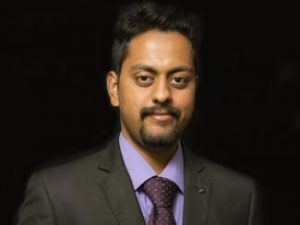
Lecture on ‘The New World of Human Behaviour’ by Mr. Biju Dominic

December 7, 2020 in 2020

The talk was conducted on 7 December 2020.

Abstract: Human Behaviour is the most complex phenomenon in the whole universe. In the last 10-15 years, learning from neuroscience has helped develop a better understanding of human behaviour. FinalMile Consulting, now a part of Fractal Analytics uses this new learning from neuroscience to solve some of the significant problems in business and society. Now at Fractal Analytics, a new understanding of human behaviour is emerging at the intersection of Artificial Intelligence and Human Intelligence.

Lecture on ‘Neuroengineering approaches for Motor Rehabilitation in Stroke and Traumatic Brain Injury Populations’ by Dr. Vikram Shenoy

November 27, 2020 in 2020

The talk was conducted on 27 November 2020.

Bio: Dr Vikram Shenoy Handiru is currently an Associate Research Scientist at Kessler Foundation in New Jersey, USA. Before beginning this postdoctoral journey, he was a PhD researcher (2013-2017) at Interdisciplinary Graduate School, Nanyang Technological University, (Singapore) working on EEG-based Brain-Computer Interfaces. Dr Handiru did his Bachelor of Technology in Electronics & Communication Engineering from National Institute of Technology Karnataka, Surathkal (India) during 2009-2013. His overarching research goals are (1) to develop signal processing and machine learning algorithms to understand the brain dynamics (2) to advance the understanding of the neurophysiology of neuromuscular disorders and (3) to develop personalized therapeutic approaches for neurorehabilitation.

Abstract: Stroke is a leading cause of long-term severe impairment that affects mobility in more than half of survivors of stroke of age > 65 years. The long-term goal of rehabilitation is to improve motor functions so that the stroke survivor can become as independent as possible. In this talk, Dr Handiru will present the prospects of the neuroengineering technologies for stroke and Traumatic Brain Injury rehabilitation. Dr Handiru will begin his research talk by introducing the concept of electroencephalography (EEG)-based Brain-Computer Interface (BCI), which is the technology that allows direct communication between the brain and an external device such as a computer. Signal processing and pattern recognition constitute essential components of a BCI system wherein the signal processing algorithms are applied to the brain signals to decode mental states which are relevant for BCI operation. In this talk, the basic BCI concepts such as brain activity monitoring using EEG, feature extraction, and feature translation for BCI control are introduced. In the latter half, the research will focus on the applications of neurorehabilitative technologies such as BCI and noninvasive brain stimulation (NIBS), and stabilometry training to improve the upper- and lower-extremity motor functions in the stroke and TBI population. The talk will conclude by providing some future research directions.