Category:

Workshop on Design Intervention for Behavioural Change

December 12, 2018 in 2018

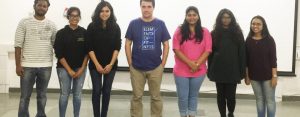
Societies around the world are trying to address large-scale social problems such as pollution, traffic, mass transportation, gender discrimination and waste disposal. Many of these problems have been recalcitrant because of a purely technological approach without consideration to the vagaries of human behavior. The aim of this workshop was to address design interventions from the lens of behavioral change. We brought together students from various disciplines like engineering, design, cognitive science and humanities to understand how behavior can be changed using a design perspective. This was also an opportunity for the students of IIT Gandhinagar and Japan Advanced Institute of Science and Technology (JAIST) to work together and tackle problems from a global, cross-cultural perspective.

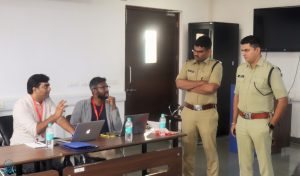
Question such as, ‘Can design interventions improve driving behaviour among the residents of Ahmedabad?’ were addressed through the talk on road safety given by Mr Akshay Raj Macwana (DCP-Traffic East Zone) and Mr Sanjay Kharat (DCP-Traffic West Zone) of the Ahmedabad Traffic Police. The audience interacted with the inspectors and guest speaks over several key issues and problems people and the authority are facing. Guest speakers also offered a visit to Ahmedabad traffic control room where all the participants witnessed the E-challan system with AI and manual challenging system through video footage.

The workshop brochure with student abstracts can be found here.
CogniTalks 2018

November 16, 2018 in 2018

Centre for Cognitive Science hosted the second edition of CogniTalks on November 16. Like last year, CogniTalks 2018 had an eclectic group of experts to engage in a series of talks about human cognition.

Understanding human cognition is increasingly becoming vital in modern science, technology, art and design. New technologies are beginning to incorporate principles of how we perceive the world, learn and remember information, make decisions and interact with the environment.

This innovative event’s aim was to bring together experts from different fields to interact and discuss how humans think and act. Designers, architects and philosophers discussed the finer points of human behaviour. Students and academics from NID, NIFT, IIM, DAIICT and other neighbouring institutes were also invited to this event.

Watch Prof Venkatesh Rajamanickam from IDC School of Design, IIT Bombay talk on Understanding Human Cognition in Data Visualisation

Watch Prof Neelkanth Hariprasad Chhaya from Srishti Institute of Art, Design and Technology, Bangalore talk on What Does Architecture Do To Us?

Watch Prof Prof. Bhuvaneshwari S from School of Linguistics and Literary Studies, Kerala talk on Theories of Space in Indian Philosophy and Aesthetics

Watch Sonia Mehra Chawla British Council India & Charles Wallace Scholar/Fellow, from Schloss Solitude, Germany talk on Material and discursive possibilities in the contemporary art framing of Art & Science; choosing focus areas.

Winter School on Cognition and Complexity

January 22, 2018 in 2018

The Winter School was held from January 22- January 28, 2018  at Centre for Cognitive Science, IIT Gandhinagar and was delivered by Prof Jorge Louçã. The sessions encapsulated an implementation of diverse of techniques for monitoring public opinion, allowing to analyze the evolution of narratives (chains of concepts and arguments) being propagated in society was very well explored. New quantitative method for discourse analysis adapted for large textual corpus was presented. The method based on network theory, machine learning, natural language processing, and mathematical modeling of multi-level complex systems was employed to understand BREXIT, Immigration Problems, and Cultural Diversity In India. Comprehensive and meaningful discussions and interactions were the primary focus of the analysis of these results.

About Prof Jorge Louçã

Jorge Louçã obtained in 2000 a PhD in informatics from the Université Paris Dauphine, Paris, France and the Faculty of Sciences of the University of Lisbon, Portugal. He is, since 2000, professor at the ISCTE-IUL Lisbon University Institute, where he teaches Programming Languages and Complex Systems Science. He is the scientific coordinator of the Master and Doctoral Programmes in Complexity Sciences, joint academic programs from the ISCTE-IUL and the University of Lisbon. He has been at the laboratory LAMSADE – Laboratoire d’Analyse et Modélisation de Systèmes pour l’Aide à la Décision, Université Paris Dauphine, from October 1995 to Mars 1999, and LabMAg – Laboratory of Agent Modelling, University of Lisbon from Mars 1999 to September 2011. He presently develops his research at ISTAR – Information Sciences and Technologies and Architecture Research Center, at ISCTE-IUL. He participated in several European research projects. Jorge Louçã is member of the council of the Complex Systems Society (CSS), and since 2015 Vice-President of the Unesco UniTwin Complex Systems Digital Campus. He is the coordinator of The Observatorium research group, aiming to real-time monitoring of multi-level network structures for the study of knowledge generation and opinion dynamics on the Internet.