Events
Participate and get involved with regular talks, workshops, and events by the department.

IITGN
Participate and get involved with regular talks, workshops, and events by the department.

17th–18th February, 2026
We hosted Dr. Sabyasachi Shivkumar for a two-day visit, during which he delivered a research talk titled “A computational framework for understanding natural behavior,” a teaching session on “Introduction to Bayesian Models of Cognition and Neuroscience,” and a research proposal presentation. In his research talk, he presented Resource-rational Context-dependent POMDPs (RCP) as a unified normative framework linking perception, learning, and planning under uncertainty and biological resource constraints, illustrating the framework through work on hierarchical motion perception, multi-context motor learning, and active sensing, and outlining a research program examining interactions between perception, learning, and planning. Dr. Shivkumar recently completed his postdoctoral training at Columbia University, working with Profs. Daniel Wolpert and Mate Lengyel on motor learning and optimal control, and received his Ph.D. in Brain and Cognitive Sciences (with a minor in Computer Science) from the University of Rochester, where he developed Bayesian models of visual perception; he also holds a dual degree in Electrical Engineering from IIT Madras.
13th January, 2026
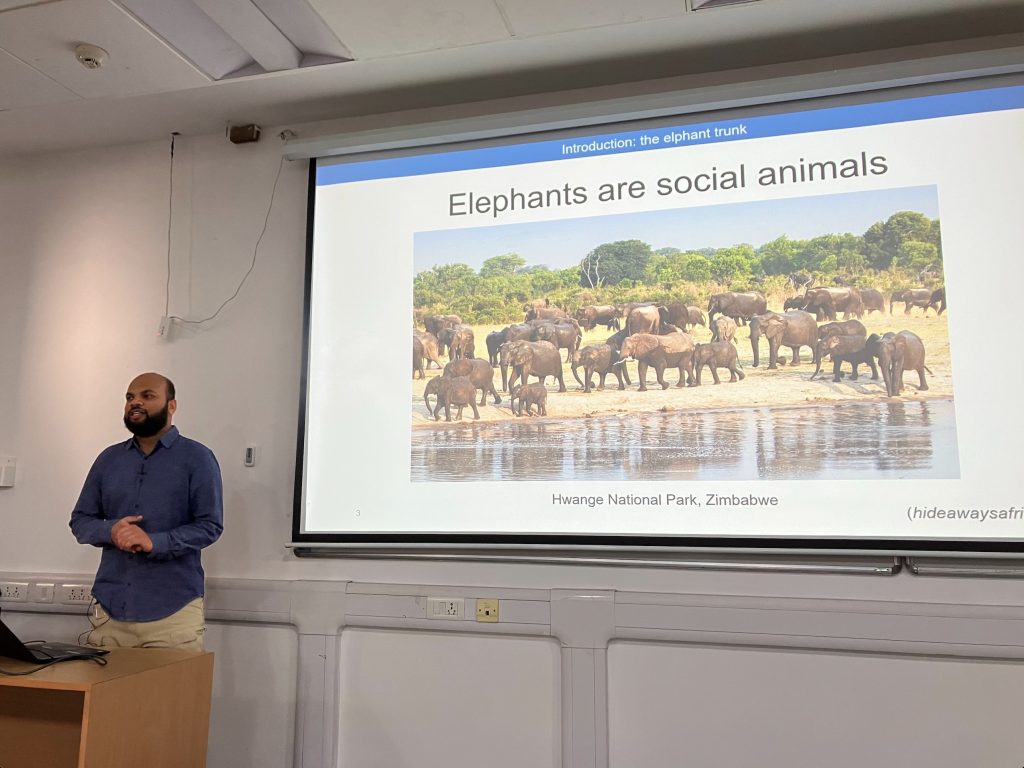
We hosted Malav Shah, a PhD candidate at Humboldt University, Berlin, for a seminar titled “Comparative Neurobiology between Asian and African Elephants: The Trunk Perspective.” The talk focused on species differences in elephant brain architecture, with particular emphasis on the neuroanatomy underlying tactile sensation in the elephant trunk. Malav discussed how sensory information from the trunk is relayed through the trigeminal system, highlighting the dominance of tactile processing in elephants. Using anatomical measurements and magnetic resonance imaging, he presented evidence showing that Asian elephants have larger brains and grey matter volumes than African elephants despite their smaller body size, while African elephants have relatively larger cerebella. The seminar also addressed postnatal brain growth and the implications of these findings for elephant development, behavior, and evolutionary adaptation.
19th December
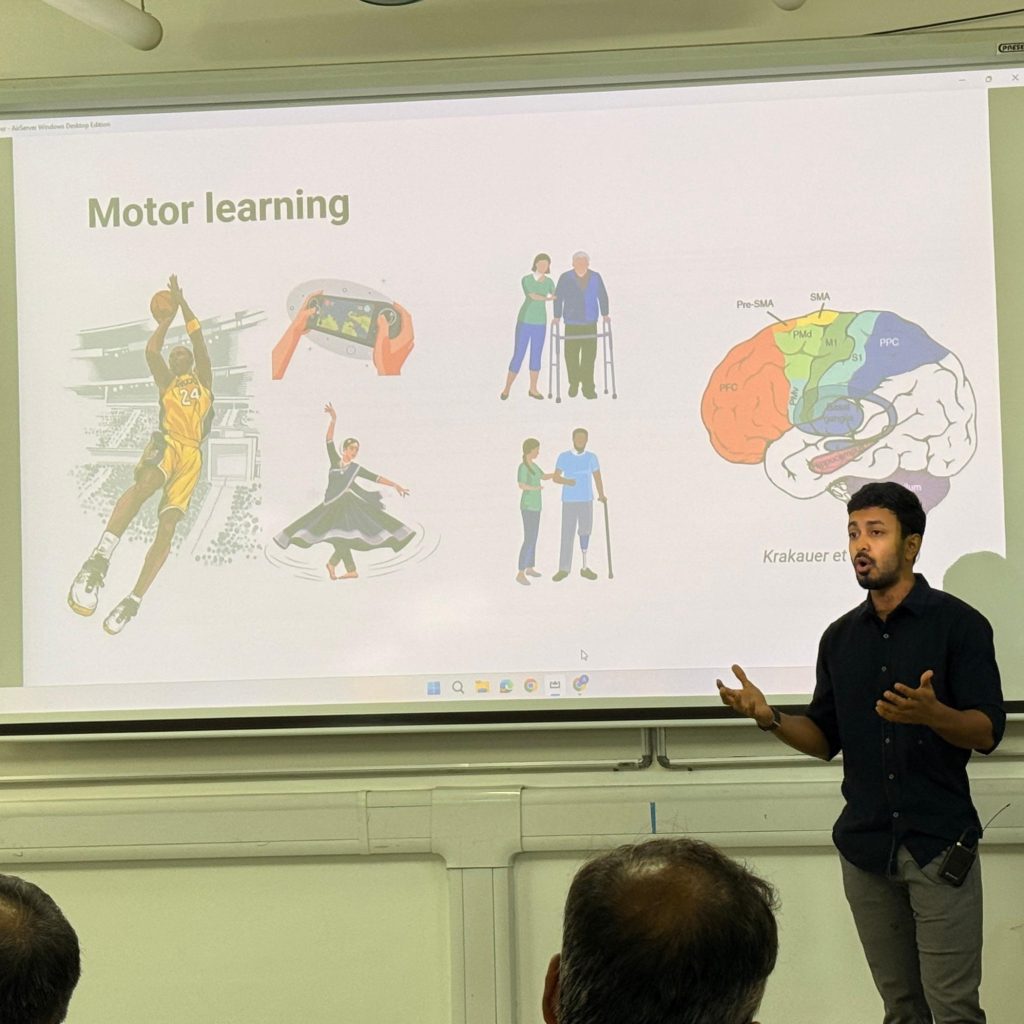
Our department recently hosted a seminar by our alumnus Tharan Suresh titled Sensorimotor Mu Phase-Dependent Mechanisms of Human Motor Control and Learning. Tharan completed his MSc in Cognitive Science at IIT Gandhinagar and is currently nearing the completion of his PhD at the University of Texas at Austin. In his talk, he discussed the role of sensorimotor mu oscillations in human motor control and learning, drawing on work using EEG-informed TMS and motor sequence learning tasks.
8th December, 2025
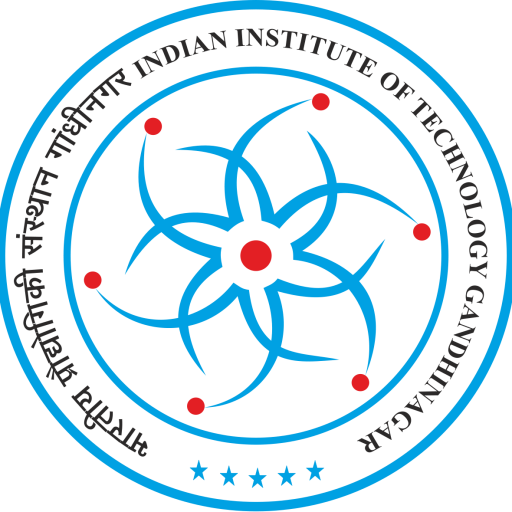
We had the pleasure of hosting our alumnus Dr. Prashanti Ganesh, currently a postdoctoral fellow at Brown University, for a talk titled “Bridging the gap between perceptual and economic decision-making.” Dr. Ganesh discussed how real-world choices integrate perceptual cues and economic values, and highlighted her recent findings showing that perceptual uncertainty shapes how humans learn from rewards. She also presented evidence that uncertainty-dependent arousal signals in the brain support this adaptive process, offering insights into the cognitive and psychophysiological mechanisms underlying individual differences in decision-making.
27th–28th October, 2025
We hosted Maha Ramamurthy from the Brain Development and Education Lab at Stanford for a two-day engagement, including a teaching demonstration and a research talk. Her teaching demo covered core aspects of higher-order vision and attention, including the role of attention as a gatekeeper to information, classic selection theories, and how visual attention is studied using behavioral and neurophysiological methods.
Her research talk, “From Theory to Tool: building a visual task to isolate differences in early reading abilities,” highlighted her work in developing reliable, theory-driven visual measures for studying reading development. She shared how these tools have now become part of the mandatory screening protocols for kindergarten and first-grade students in California, offering new insights into the heterogeneity of early reading abilities.
22nd October, 2025
We had the pleasure of hosting Ketika Garg for her talk on “Social interactions under conflicting preferences and beliefs.” She discussed how social interactions shape decisions, influence cognitive processes, and contribute to large-scale phenomena such as collective intelligence and polarization. Her talk explored how people navigate risk–reward differences in coordination settings and how belief divergence shapes social judgments, online behavior, and affective responses, offering insights into mechanisms that drive contemporary polarization.
14th August, 2025
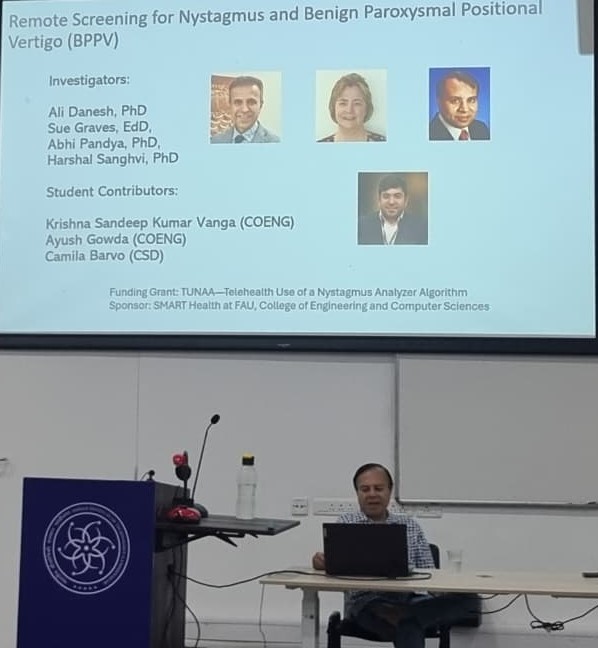
We had the opportunity to host Prof. Abhijit Pandya, who is visiting our department as a guest professor. Prof. Pandya is a faculty member at Florida Atlantic University, where he serves in the Department of Electrical Engineering and Computer Science and the Department of Biomedical Engineering. His work spans neural network algorithms, VLSI implementation of neural networks, low-power CMOS circuit design, digital circuit design, and layout and verification. He interacted with our community and shared perspectives from his extensive experience across computational and engineering approaches.

24th June, 2025
We had the privilege of hosting Prof. Amit Sethi from the University of Utah for our Cognitive and Brain Sciences seminar. Prof. Sethi shared cutting-edge research on “Hand rehabilitation after moderate-to-severe stroke using non-invasive brain stimulation and functional electrical stimulation.”

21st June, 2025
IIT Gandhinagar (IITGN) celebrated its 14th Convocation Ceremony with immense pride and enthusiasm. This landmark event honored the graduating students of the MSc Cognitive Science programme, recognizing both their outstanding academic achievements and their holistic growth.

7th June 2025
Distinguished researchers and alumni from the Department of Cognitive and Brain Sciences at IIT Gandhinagar showcased their pioneering research at the Mind, Brain, and Consciousness Conference 2025, hosted by IIT Mandi. This prestigious conference served as an outstanding platform for our team to present their innovative work and connect with leading experts and peers in the field of cognitive science.

11th April, 2025
We celebrated the farewell of the MSc Cognitive and Brain Sciences Class of 2025 at IIT Gandhinagar. The evening brought together students, faculty, and staff to honour our graduating cohort and reflect on their remarkable journey within our department.

12th March, 2025
Advances in NeuroRehabilitation and Assistive Technologies Workshop
Prof. Yogesh Kumar Meena, Assistant Professor, Department of Cognitive and Brain Sciences recently hosted a successful two-day workshop on Advances in NeuroRehabilitation and Assistive Technologies at IIT Gandhinagar! This event brought together experts from around the world to discuss and showcase innovative solutions in neurorehabilitation.

22nd February, 2025
CoLab2025 at IIT Gandhinagar’s Cognitive Science Lab! 🧠🔬
Industry leaders and academics came together to explore innovative, market-driven solutions for a greener future. Highlights included demos of cutting-edge CogSci tech like EEG, motion control, and brain simulation.

21st February, 2025
Prof. Apoorva Bhandari from Brown University shared insights on “A cognitive map for social inference?” Fascinating discussion on how we navigate complex social networks.

15th February, 2025
🧠 Cognitive Science Symposium 2025 at IIT Gandhinagar: A mind-blowing success! Talks, demos & interactive sessions sparked curiosity.

14th February, 2025
🧠 Dr. Ruhi Bhanap, IITGN MSc 2020 alum, wowed us at our Alumni Seminar! She shared insights on memory-driven visual attention, from “Looking at Nothing” to working & long-term memory interplay. Proud of her journey from IITGN to UZurich! 🎓✨

27th January, 2025
IIT Gandhinagar recently hosted an enlightening Cognitive and Brain Sciences seminar featuring Prof. Veeky Baths from BITS Pilani, K.K. Birla Goa Campus. Prof. Baths delivered an insightful presentation titled “Virtual Reality and Mobile-based Goal-Oriented Games for Cognitive Assessment: Hope or Hype?” The discussion shed light on the potential of game-based cognitive assessments, highlighting their ability to surpass traditional methods in revealing real-world cognitive abilities. A pilot study involving 82 young participants was showcased, demonstrating the effectiveness of these innovative evaluation tools. The event fostered a productive conversation among attendees, and we appreciate everyone’s participation.

19th January 2025
IIT Gandhinagar conducted an Open House for its MSc Cognitive Science program, providing an opportunity for prospective students to learn about the program and its application process. The event allowed attendees to meet experts and gain insights into the work conducted at IIT Gandhinagar. The MSc program in Cognitive Science is an interdisciplinary field that covers a wide range of areas, including cognitive psychology, neuroscience, and artificial intelligence, with a strong emphasis on both coursework and research projects.

23rd December, 2024
The Department of Cognitive and Brain Sciences at IIT Gandhinagar is proud to announce that our talented students, research staff, and faculty members presented their cutting-edge research at the Annual Conference of Cognitive Science (ACCS) and SAFAL 2024, held at IIT Bombay. This event provided an excellent platform for our team to showcase their innovative work and engage with experts and peers in the field of cognitive science.
Preethi R, a research assistant in our department, has received the Best Oral Presentation Award.

19th December, 2024
How do you know the size of your hand without looking at it? The brain relies on an internal body model — a sort of mental map that combines sensory inputs and stored information. For people who are blind, however, this map is built without visual cues. In a recent study, researchers at the Department of Cognitive and Brain Sciences, IITGN have explored how congenitally blind individuals’ body model map differs from that of the sighted ones.
Like any map, our body model map also shows distortions. Now the question arises — what sensory modalities are responsible for building this distorted body model? The team measured the body models of blind and sighted subjects to assess the impact of visual input and its lack thereof. The participants were asked to identify landmarks on their hands, such as knuckles and fingertips. When the map of the hand was reconstructed, it was found that blind participants tended to have body models that were much more distorted than those with normal sight, thereby highlighting the critical role of visual input in shaping body representations. By mapping the body model in blind participants for the first time, the study opens new pathways to understanding how different maps in the brain shape human perception and navigation.
The study was conducted by former Masters student Srisai Rakesh Kottu and Prof Leslee Lazar, PhD Lazar in collaboration with the Blind People’s Association, Ahmedabad.
Read the paper here:https://www.sciencedirect.com/science/article/pii/S0010945224002697?via%3Dihub

18th November, 2024
Dr. Prakhar Godara delivered a talk titled “Studying Cognition in Bandit Tasks: Deviating from Optimal Learning and Planning.” He explored how biases like positivity and confirmation bias arise in decision-making and introduced the meta-Bayes Adaptive MDP framework to explain human planning under cognitive constraints. The session provided insights into deviations from optimal models in two-armed Bernoulli bandit tasks.

30th October, 2024
Dr. Sneha Shashidhara, a senior research fellow at the Centre for Social and Behaviour Change and a lecturer at Ashoka University, delivered a lecture on the brain’s multiple-demand (MD) network. She explained how this network manages diverse cognitive tasks and supports complex, goal-directed behavior by integrating features like time pressure and reward, with various regions collaborating as a unified system.

2nd October, 2024
At Amalthea 2024, IIT Gandhinagar, the Department of Cognitive and Brain Sciences showcased a one-electrode EEG system by NeuroSky. Represented by Vishal Ubnare and a fellow researcher, the demonstration featured real-time EEG analysis through interactive graphs and games, with the electrode placed on the forebrain and a base on the ear lobe. The event introduced attendees to brain-computer interfacing and cognitive neuroscience.
19th September, 2024
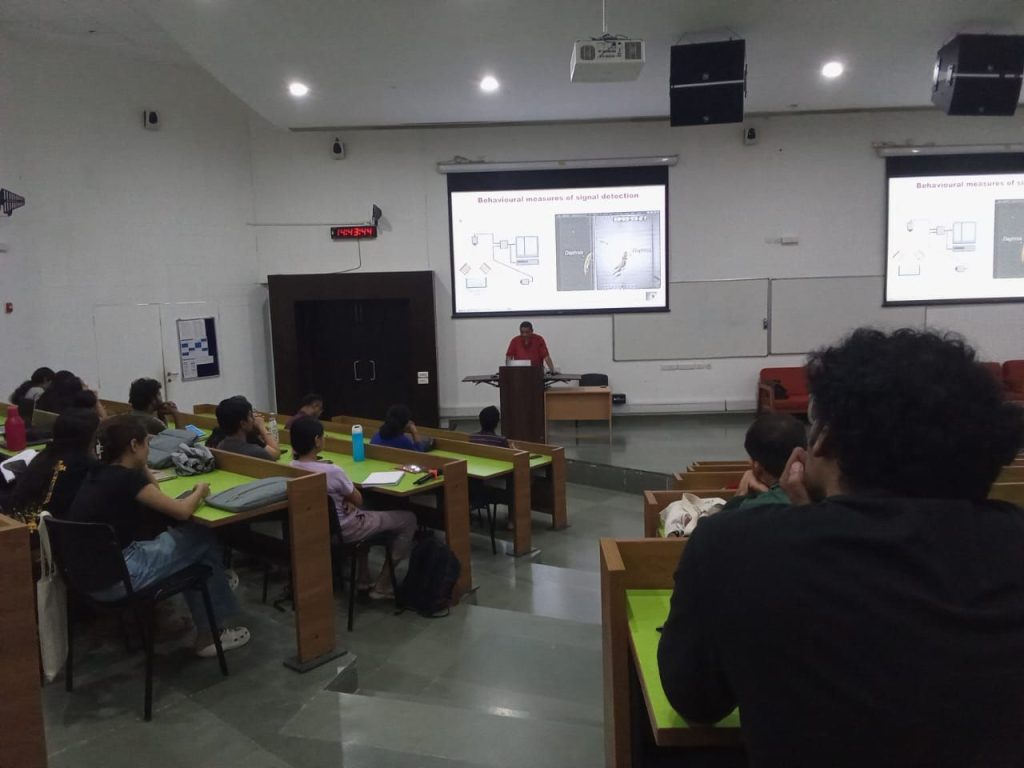
A session by Dr. Rama Ratnam where he presented on “The neural basis for sensory perception of weak signals buried in noise.” His work explores how our brains are able to detect and identify subtle signals in the face of noise. His research sheds light on the remarkable complexity of our sensory systems.
13th September, 2024
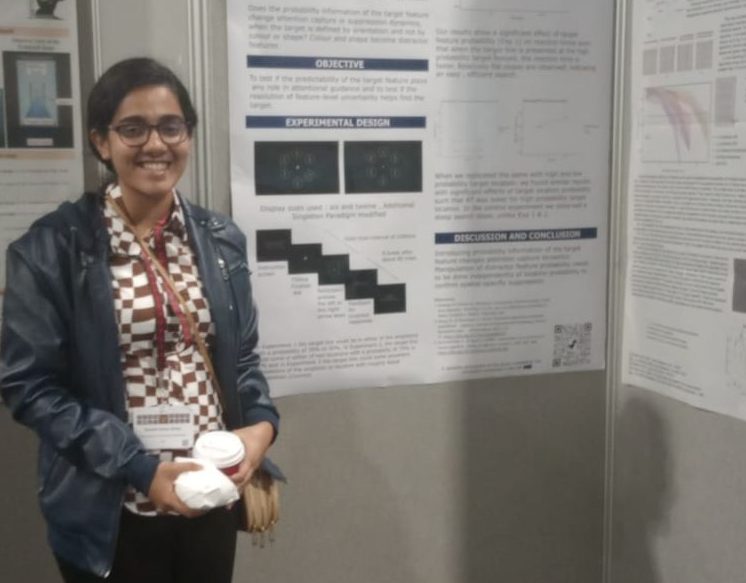
Hannah Grace Jaison, a PhD student working with Prof. Meera Mary Sunny at the Department of Cognitive and Brain Sciences presented her research work at the European Conference on Visual Perception 2024. The title of her poster was ‘Separating out distractor suppression from attentional guidance using predictability of feature and location’.
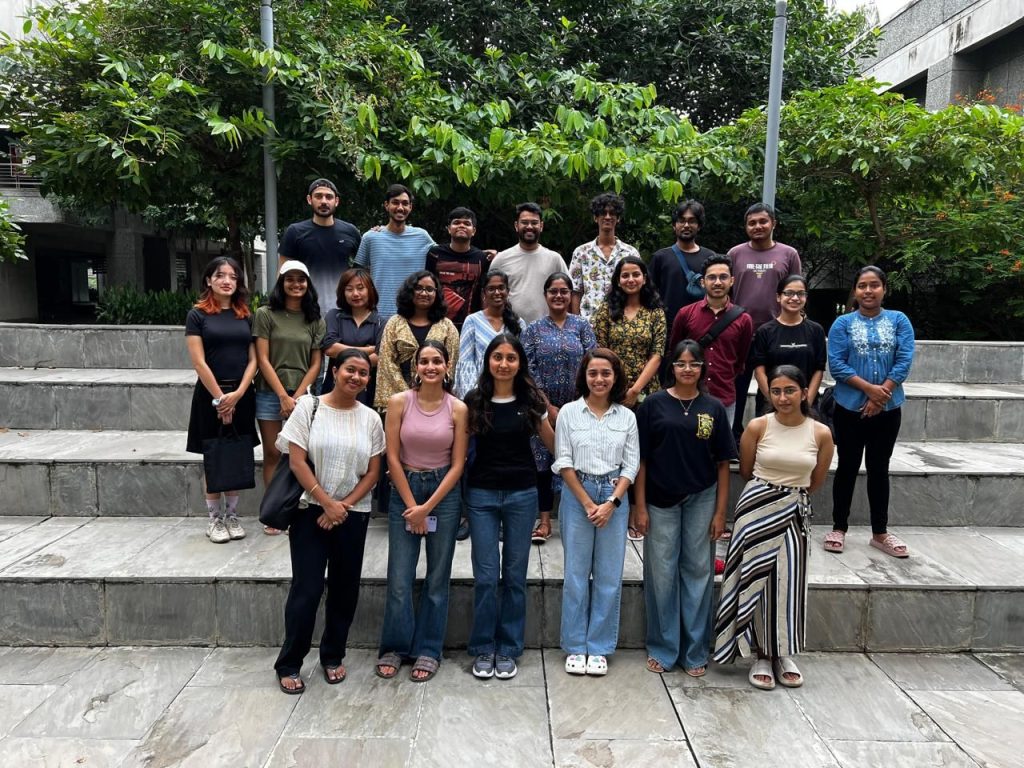
The new MSc 2024 students’ batch in the Department of Cognitive and Brain Sciences, IIT Gandhinagar.
12th April, 2024
Dr. Supratim Ray, our esteemed speaker from the Centre for Neuroscience, IISc Bangalore, brought exceptional expertise and insight to the series. As a distinguished professor, Dr. Ray’s research on the “Effects of Meditation on the Brain” illuminated the profound relationship between meditation and gamma oscillations, offering valuable insights into cognitive health and neuroprotection.
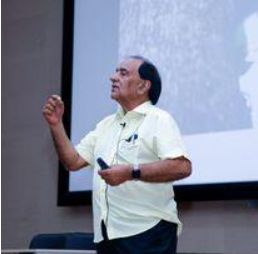
12th March, 2024
Dr. Mewa Singh, Distinguished Professor (for Life) at the University of Mysore. Dr. Singh’s remarkable career in the ecology and behavior of wild mammals, particularly non-human primates, has earned him prestigious accolades, including two Ramanna Fellowships (DST), a JC Bose Fellowship, and his current role as a SERB Distinguished Fellow. He is also an esteemed Fellow of multiple academies, including the Indian Academy of Sciences Bangalore and the Indian National Science Academy New Delhi.
In his talk titled “Complex Environments Lead to the Emergence of Complex Skills in Monkeys,” Dr. Singh delved into the intriguing realm of urban ecology and its influence on animal behavior. Drawing from his extensive studies, he explored how exposure to different environments shapes the cognitive abilities and foraging skills of monkeys.
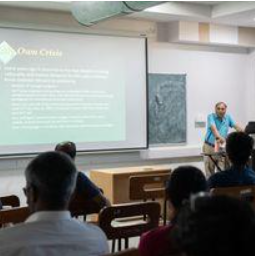
7th March, 2024
Dr. Goel delved into the intriguing concept of “Tethered Rationality: A Model of Behavior for the Real World.” In a department seminar

26th Feb, 2024
Dr. Bhattacharyya delved into the pioneering field of Collaborative Brain-Computer Interfacing (BCI), showcasing its transformative potential in enhancing cognitive and physical abilities in a department seminar.
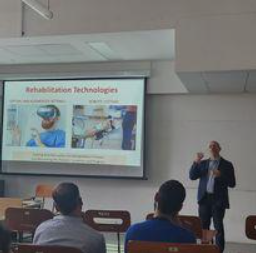
13th Feb, 2024
Dr. Giacinto Barresi from the Istituto Italiano di Tecnologia (IIT), Italy, at our Cognitive and Brain Sciences Seminar. Dr. Barresi delved into the realm of “Rehabilitation technologies for people with multiple sclerosis.”
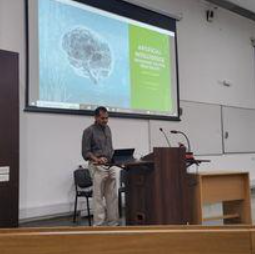
Jan 15th, 2024
Mr. Mauktik Kulkarni, a renowned speaker, delivered a seminar at IIT Gandhinagar on the topic of “Decoding the Landscape: AI’s Initial Impact on Artists, Journalists, & Democratic Institutions”
Jan 11, 2024
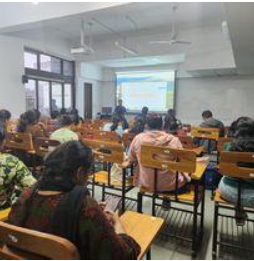
Dr. Shanmukha Aditya Upadhyayula, a renowned speaker in the field of cognitive and brain sciences, delivered a seminar at IIT Gandhinagar on the topic of “Visual experience through time: Characterising the role of scene semantics and grammatical structures in film and narrative comprehension”
January 6-7, 2024
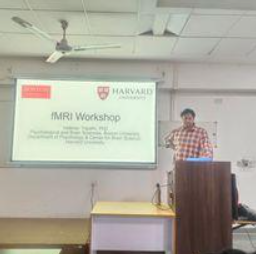
The Department of Cognitive and Brain Sciences, IIT Gandhinagar hosted Dr. Vaibhav Tripathi for a two-day workshop on fMRI analysis “From Data to Insight: A practical fMRI Workshop”.
December 18, 2023
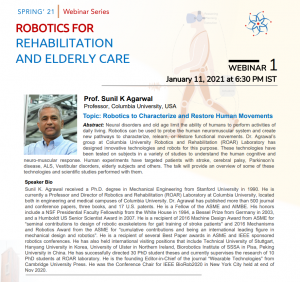
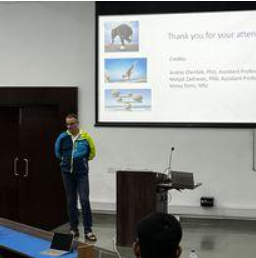
Research talk by Prof. Zlatko Matjačić on “Contemporary concepts in development of rehabilitation robots”